
Table of Contents
Discover authentic Korean farm life, K-drama filming locations, and illuminated railway tunnels in one unforgettable journey through Gyeongnam’s rural heartland.
Why Changwon Rural Tourism Deserves Your Attention
South Gyeongsang Province offers something increasingly rare in modern Korea: genuine countryside experiences without the tourist veneer. Changwon rural tourism anchors a region where persimmon orchards stretch toward distant mountains, century-old hackberry trees hold court over quiet villages, and abandoned railway tunnels have been reborn as luminous art installations.
This corner of Korea remains largely undiscovered by international visitors. The four destinations detailed in this guide—Bitdolbaegi Village, the Bukburi Hackberry Tree, Gimhae Nakdonggang Rail Park, and Miryang Twin Tunnel—form a natural circuit through farmland, riverside paths, and repurposed industrial heritage. While Gimhae and Miryang are administratively separate cities, both lie within 30–40 minutes of central Changwon, making them seamless additions to any rural itinerary based in the region.
Each destination offers hands-on experiences that connect visitors directly with local traditions, seasonal rhythms, and communities actively preserving their way of life. Whether you’re seeking the filming location from Extraordinary Attorney Woo or simply want to spend a night in a traditional ondol-heated farmhouse, Changwon rural tourism delivers authenticity that mass tourism destinations cannot replicate.
Bitdolbaegi Village: A Four-Season Farm Experience
Seasonal Harvest Programs
Bitdolbaegi Village operates year-round harvest programs tailored to each season’s bounty—making it a cornerstone of any Changwon rural tourism itinerary focused on agriculture. Winter through spring brings strawberry picking, similar to the strawberry harvesting experiences detailed in our Boryeong Winter Travel Guide. Summer shifts to tomatoes and melons. Autumn belongs to rice harvesting and the region’s celebrated sweet persimmons—a designated specialty of the Daesan-myeon area.
These aren’t passive observation tours. Visitors harvest crops directly, learning techniques from local farmers who’ve worked this land for generations. The village maintains working agricultural operations, meaning every experience connects to genuine farm productivity rather than staged demonstrations.
Getting Around the Village
Two options exist for exploring the village grounds: vintage “can trains” (깡통열차) or electric carts. Both traverse routes through orchards and fields, offering perspectives impossible to capture on foot within limited time. The pace suits families with children while still delivering meaningful exposure to rural landscapes.
Hwangto Pension: Overnight Farm Stays
The village operates its own accommodation directly within the persimmon orchards. Hwangto Pension—named for the yellow clay (hwangto) traditional to Korean earthen construction—features functioning agungi (traditional wood-fired heating systems). Guests can fire the stove themselves, roasting sweet potatoes or potatoes in the embers while the ondol floor heating warms the room from below.
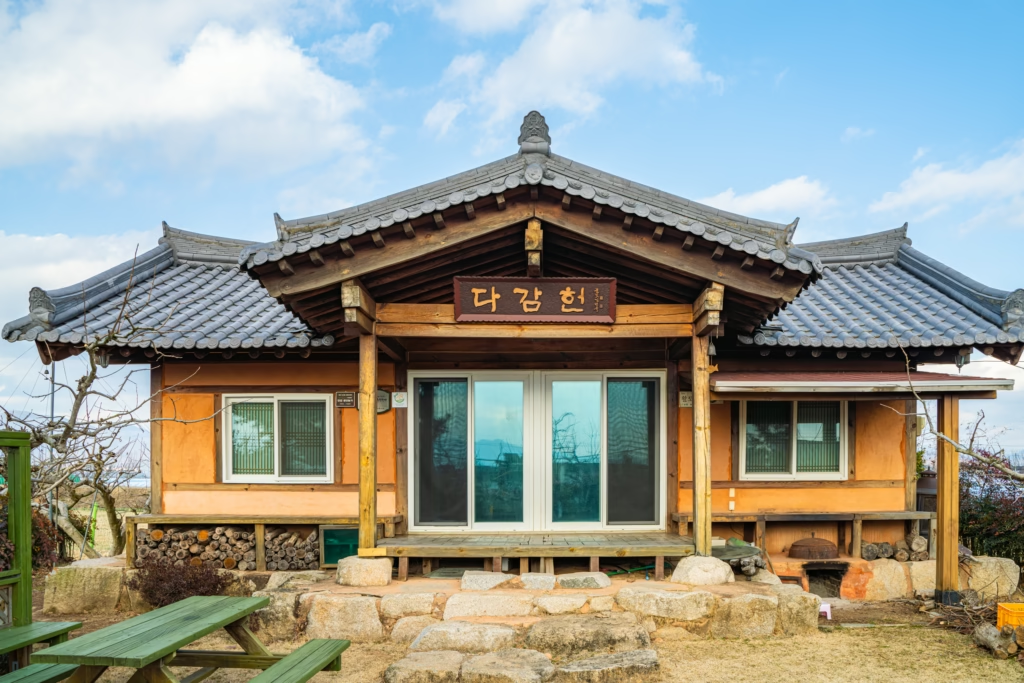
This experience connects directly to pre-industrial Korean domestic life. The pension isn’t a museum recreation; it’s a working example of heating technology that sustained Korean households for centuries before modern systems arrived.
⚠️ The Travel Manual Tip: The Bitdolbaegi Village website (sweetvillage.co.kr) operates primarily in Korean. For reservations, consider using Naver Translate or Papago to navigate the booking system, or call directly (+82-55-291-4829) where staff may assist with basic English. Booking 2–3 weeks ahead is recommended for weekend stays, especially during strawberry season (December–April).
Practical Information:
- Address: 51-17, Jinsandae-ro 505beon-gil, Daesan-myeon, Uichang-gu, Changwon-si, Gyeongsangnam-do
- Contact: +82-55-291-4829
- Website: sweetvillage.co.kr
Bukburi Hackberry Tree: The K-Drama Landmark
From Village Guardian to Natural Monument
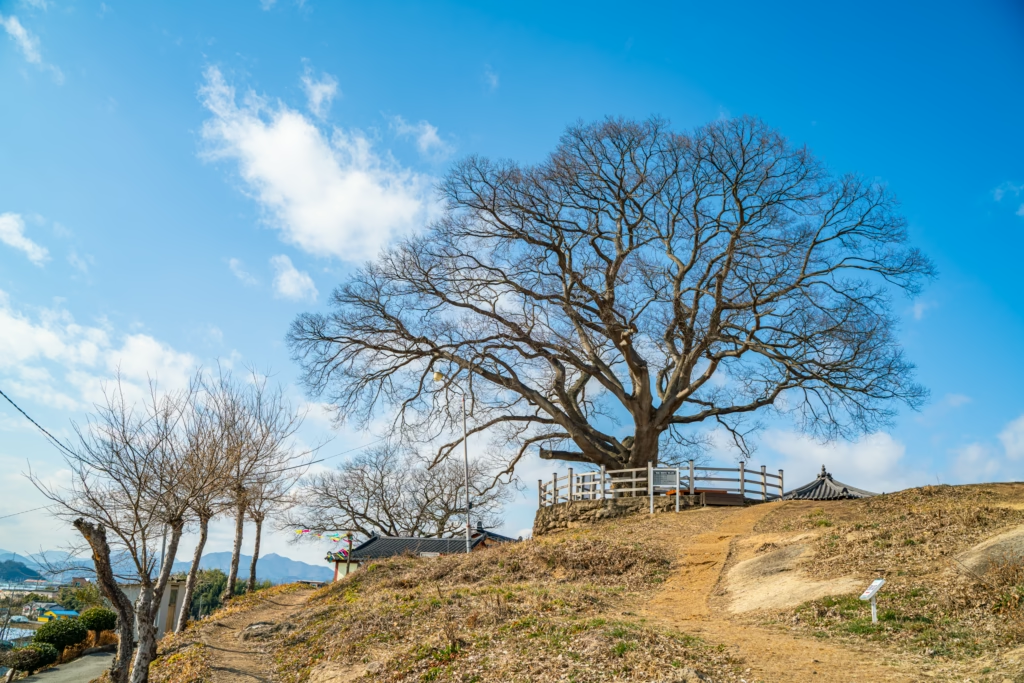
For over 500 years, a solitary hackberry tree has stood atop a hill in Bukburi Village’s eastern settlement. Known locally as a dangsan tree—a guardian spirit tree central to traditional village cosmology—it existed in comfortable obscurity until 2022.
That year, the Korean drama Extraordinary Attorney Woo (이상한 변호사 우영우) featured this tree prominently, transforming it into an overnight sensation. Domestic and international visitors flooded the village. Recognition of its cultural and botanical significance followed: the Bukburi Hackberry Tree now holds official designation as a Natural Monument of Korea. This site adds a pop-culture dimension to the traditional Changwon rural tourism landscape, drawing younger visitors who might otherwise overlook agricultural experiences.
Village Response to Sudden Fame
Dongbu Village residents adapted quickly to their unexpected popularity. House walls throughout the settlement now display murals depicting scenes and characters from the drama. Temporary parking facilities and public restrooms were installed to accommodate visitor flows that small rural infrastructure had never anticipated.
The initial rush has subsided. Visitors today encounter a quieter atmosphere—closer to what the village offered before cameras arrived. The Nakdonggang River walking trails surrounding the village remain excellent for unhurried exploration.
⚠️ The Travel Manual Tip: Visit during golden hour (1–2 hours before sunset) for optimal photography conditions. The tree’s silhouette against the evening sky recreates the drama’s most iconic shots. Weekday mornings offer the most solitude.
Practical Information:
- Address: 102-1, Bukbu-ri, Daesan-myeon, Uichang-gu, Changwon-si, Gyeongsangnam-do
- Best for: K-drama location hunters, photography enthusiasts, riverside walks
For those interested in other Korean filming locations, our coverage of Ulleungdo’s dramatic landscapes explores another destination gaining recognition through media exposure.
Gimhae Nakdonggang Rail Park: Rails, Rivers, and Wine
Although technically in a neighboring city, Gimhae Nakdonggang Rail Park remains an essential stop on any broader Changwon rural tourism circuit—just 25 minutes from central Changwon by car.
Rail Bikes Along the Nakdong River
Gimhae Nakdonggang Rail Park occupies a decommissioned segment of the Gyeongjeon Line railway. The original rail bridge and tunnels remain intact, repurposed for recreational use rather than demolished. Rail bike routes follow the preserved tracks across the bridge structure, with an observation deck installed atop the railway framework offering panoramic views of the Nakdong River basin.
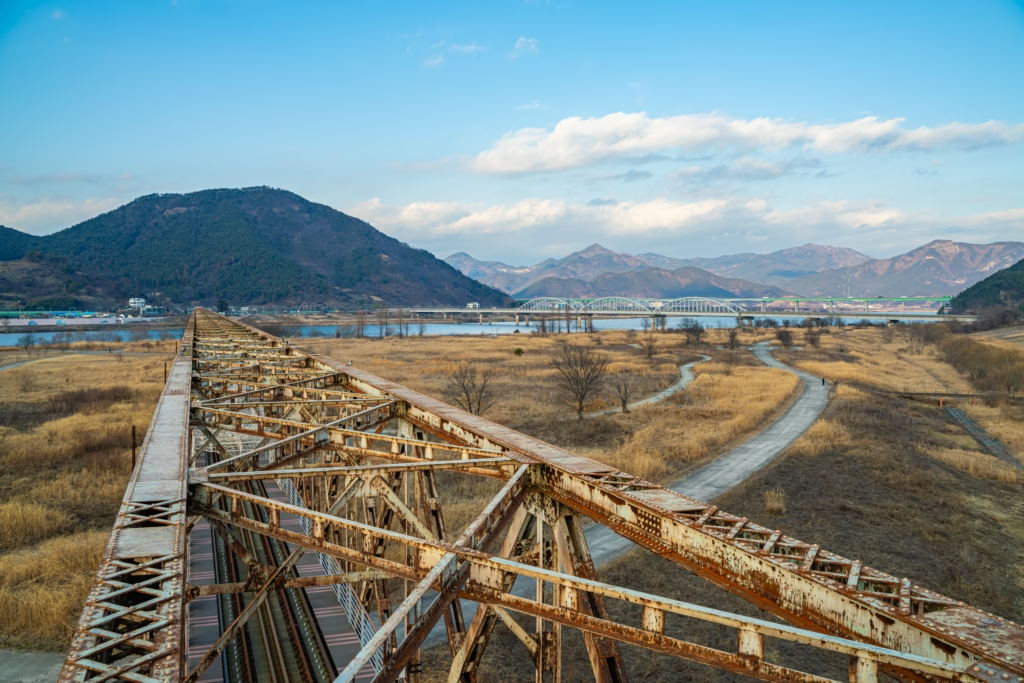
The rail bike experience suits couples and families equally. Routes are manageable for varying fitness levels, and the river scenery provides constant visual interest throughout the ride.
Saenglim Wine Tunnel
The former Saenglim Tunnel now houses a wine-focused facility highlighting Gimhae’s regional specialty: wild raspberry wine. The tunnel’s constant cool temperature creates natural cellar conditions—a practical reuse of railway infrastructure that also educates visitors about local viticulture.
Inside, a 485-meter exhibition corridor leads through displays on wine production, tasting rooms, a café, and retail space. The tunnel’s inherent darkness has been leveraged for dramatic lighting installations, creating numerous photography opportunities throughout the passage.
⚠️ The Travel Manual Tip: The wine tunnel and rail bikes can be combined into a half-day visit. Start with rail bikes in the morning when temperatures are cooler, then finish with wine tasting. Designated drivers should note that tasting portions are small but alcohol content is real.
Practical Information:
| Category | Details |
|---|---|
| Address | 41, Masa-ro 473beon-gil, Saenglim-myeon, Gimhae-si, Gyeongsangnam-do |
| Contact | +82-55-333-8359 |
| Rail Bike Hours | Nov–Mar: 09:30–17:00 / Apr–Oct: 09:30–18:00 |
| Rail Bike Rates | 2 persons: ₩15,000 / 3 persons: ₩19,000 / 4 persons: ₩23,000 |
| Wine Tunnel Hours | 09:30–18:00 |
| Wine Tunnel Admission | Adults: ₩2,000 / Youth & Seniors: ₩1,500 / Children: ₩1,000 |
Miryang Twin Tunnel: A Century of History Illuminated
Like Gimhae, Miryang sits outside Changwon’s administrative boundaries but integrates naturally into this Changwon rural tourism route—approximately 40 minutes east by car.
Imperial Origins
Miryang Twin Tunnel carries history that predates most surviving Korean infrastructure. The original tunnel was constructed during the Gyeongbu Line railway development—a project directly ordered by Emperor Gojong during the final years of the Korean Empire. The inscription “식산흥업” (roughly: “develop industry, promote enterprise”) remains carved at the entrance, a physical artifact of national aspirations during a period of existential threat to Korean sovereignty.
A second tunnel was added in the 1940s to increase capacity. Both tunnels served continuous railway operations until KTX high-speed rail services rendered the original route obsolete. Years of abandonment followed before the tunnels’ potential as a tourism asset was recognized.
The Illuminated Experience
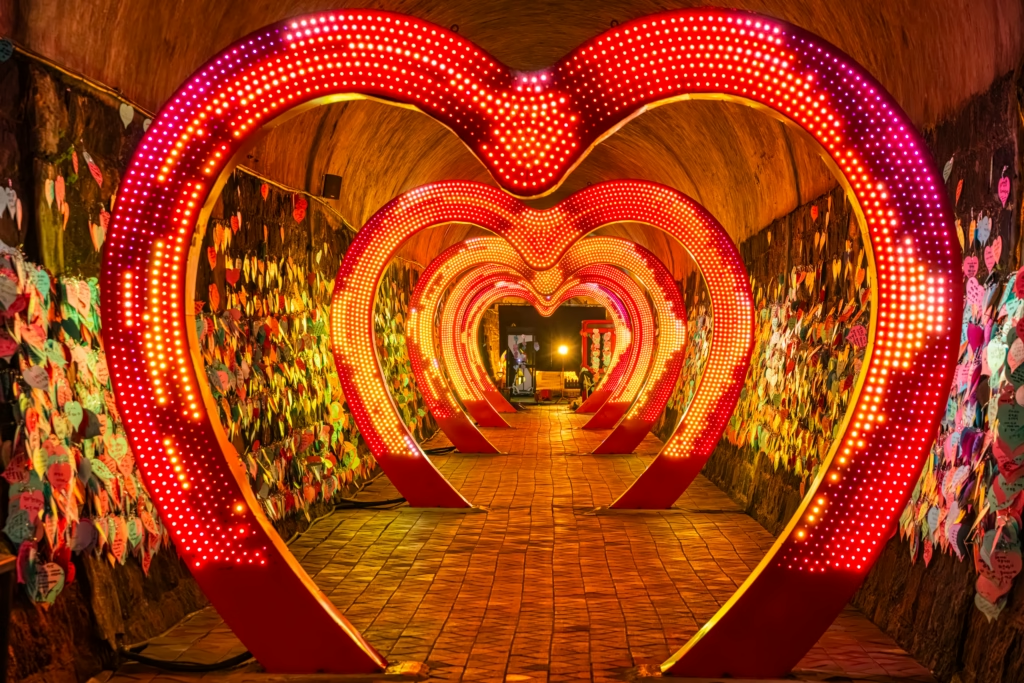
Today, approximately one million LED bulbs transform the combined 1-kilometer tunnel length into an immersive light installation. The approximately 500-meter twin tunnels present sequential themed zones, each employing different lighting configurations, colors, and effects.
The experience unfolds gradually. Walking pace allows full appreciation of transitions between zones, each designed around distinct visual concepts. Photography points appear throughout, though the overall effect rewards sustained attention rather than quick snapshots.
Scale distinguishes Miryang Twin Tunnel from similar light installations elsewhere in Korea. The industrial architecture—raw concrete, original railway infrastructure—grounds the visual spectacle in tangible history rather than pure fabrication.
⚠️ The Travel Manual Tip: Weekend evenings draw the largest crowds. For photography without other visitors in frame, arrive at opening time on weekdays. The tunnel maintains a constant cool temperature (~15°C year-round), so bring a light layer even in summer.
Practical Information:
| Category | Details |
|---|---|
| Address | 537-11, Samnangjin-ro, Samnangjin-eup, Miryang-si, Gyeongsangnam-do |
| Hours | Mon–Fri: 10:30–19:00 / Sat–Sun: 10:30–20:00 |
| Admission | Adults: ₩8,000 / Youth: ₩6,000 / Children: ₩5,000 |
For more on Korea’s repurposed railway heritage, the Korea Railroad Corporation (KORAIL) maintains information on active and heritage rail experiences nationwide.
Planning Your Changwon Rural Tourism Circuit
Suggested Itinerary
Day 1:
- Morning: Bitdolbaegi Village seasonal harvest program
- Afternoon: Village exploration via can train or electric cart
- Evening: Hwangto Pension overnight (reserve the agungi experience)
Day 2:
- Morning: Bukburi Hackberry Tree visit and village murals
- Midday: Nakdonggang riverside walk
- Afternoon: Gimhae Nakdonggang Rail Park (rail bikes + wine tunnel)
- Evening: Miryang Twin Tunnel illumination
For travelers extending their journey south, our Geoje Spring Travel Guide covers coastal destinations within 90 minutes of Changwon—an ideal continuation of this Gyeongnam exploration. In midsummer, Haman’s lotus theme park—about 30 minutes from central Changwon—fits neatly into the same circuit.
Transportation Notes
Private vehicle provides optimal flexibility for this Changwon rural tourism circuit. All four locations fall within 30–45 minutes of central Changwon by car, though public transit connections between sites require transfers and careful scheduling.
From Seoul, KTX to Changwon Central Station takes approximately 2.5 hours. Rental cars are available at Changwon Station and Gimhae International Airport.
Budget Estimate
| Item | Cost (per person) |
|---|---|
| Bitdolbaegi harvest experience | ₩10,000–20,000 |
| Hwangto Pension (per room/night) | ₩80,000–120,000 |
| Gimhae Rail Bike (2-person) | ₩7,500 per person |
| Wine Tunnel admission | ₩2,000 |
| Miryang Twin Tunnel | ₩8,000 |
| Meals (2 days) | ₩40,000–60,000 |
| Total (budget estimate) | ₩150,000–220,000 |
The Travel Manual Summary
Changwon rural tourism delivers experiences that urban Korea cannot replicate: working farms, centuries-old guardian trees, and repurposed industrial heritage transformed into art. The destinations covered here require neither extreme budgets nor complex logistics—simply willingness to venture beyond well-worn tourist circuits.
Bitdolbaegi Village offers rare access to functioning agricultural traditions. The Bukburi Hackberry Tree connects contemporary K-drama popularity with deep-rooted village customs. Gimhae Nakdonggang Rail Park and Miryang Twin Tunnel demonstrate how abandoned infrastructure can become compelling attractions rather than liabilities.
Book the farmstay if possible. Reserve a night in the ondol-heated room. Build a fire, roast something in the coals, and let the countryside rhythm reset your pace. Changwon rural tourism rewards those who stay long enough to feel it.