
Table of Contents
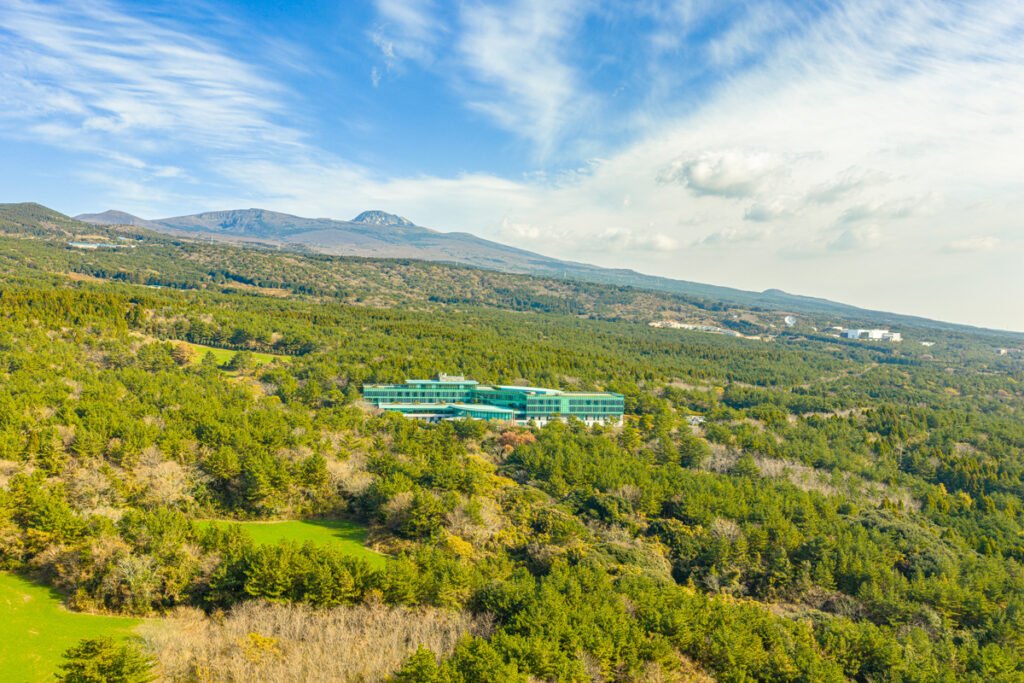
When daily life reaches its saturation point, the answer often lies not in doing more, but in strategic subtraction. A Jeju wellness retreat offers precisely this—a calibrated return to baseline. At 350 meters elevation on Hallasan’s mid-mountain slopes, WE Hotel Jeju has refined the art of the reset since 2014, combining five-star hospitality with medical-grade wellness protocols.
This guide covers the practical framework for a Jeju wellness retreat that actually delivers results: hydrotherapy protocols, forest therapy routes, premium tea ceremonies, and optional summit challenges. Like our previous [Ulleungdo Winter Guide], this is a no-fluff manual for the empirical traveler.
Why Jeju’s Mid-Mountain Zone for Wellness Travel
The 1100 Road corridor climbing Hallasan’s western slopes creates a distinct microclimate. Urban noise fades within fifteen minutes of leaving Jeju City. The forest density increases. Air quality measurably improves. WE Hotel Jeju sits within this transition zone, occupying 210,000 square meters of preserved forest—a deliberate positioning that makes the property itself a therapeutic tool.
The hotel draws from a 2,000-meter deep volcanic aquifer. This isn’t marketing language. The water contains verified concentrations of vanadium, selenium, bicarbonate, and chromium, certified by Jeju’s Environmental Resources Research Institute. Every tap, pool, and kitchen in the facility uses this source. For those tracking their wellness inputs, this detail matters.
Haeam Hydro: The Core Wellness Protocol
The signature program at WE Hotel’s Wellness Center deserves specific attention. Haeam Hydro isn’t a standard spa treatment—it’s a structured hydrotherapy session designed around flotation and aquatic bodywork.
The meditation pool occupies a domed space intentionally designed to reference prenatal environments. Water temperature holds between 34-37°C, matching core body temperature to eliminate thermal stress. Participants wear flotation devices, suspending the body at the water’s surface while trained therapists perform stretching and pressure-point work.
The sensation differs fundamentally from land-based massage. Without gravitational compression on joints and spine, the body releases tension patterns that typically resist conventional treatment. A single 60-minute session produces measurable reductions in muscle tension and cortisol levels—useful data for those who approach wellness empirically.

Forest Therapy: Two Distinct Trail Options
WE Hotel maintains two forest zones with different characteristics. Understanding the distinction helps you allocate time effectively.
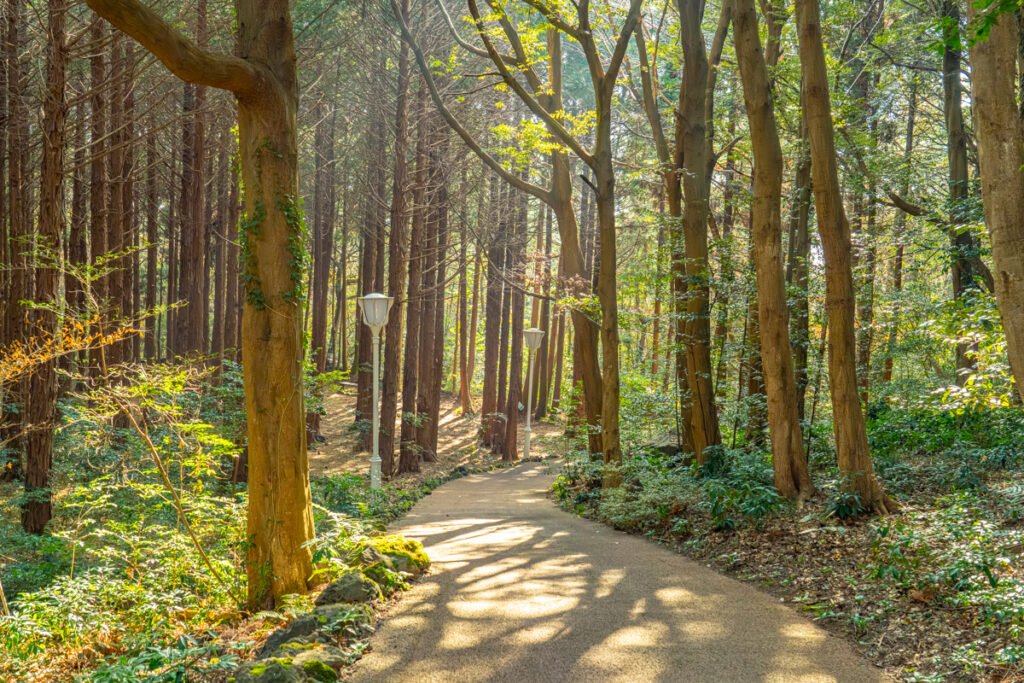
Dorae Forest preserves original Jeju vegetation—the trees and undergrowth existed before the hotel. Walking here means moving through an ecosystem that predates human intervention. The paths are less manicured, the experience more immersive.
Haeam Forest offers a more curated experience with maintained trails and rest points. The hinoki cypress grove here produces concentrated phytoncide levels. For visitors specifically seeking the documented benefits of forest bathing (reduced blood pressure, improved immune markers), this section delivers the highest concentration of active compounds.
Both zones connect to complimentary wellness programs for hotel guests: guided forest meditation, morning yoga sessions, and crystal singing bowl sessions. These aren’t afterthoughts—they’re structured components of the property’s wellness architecture.
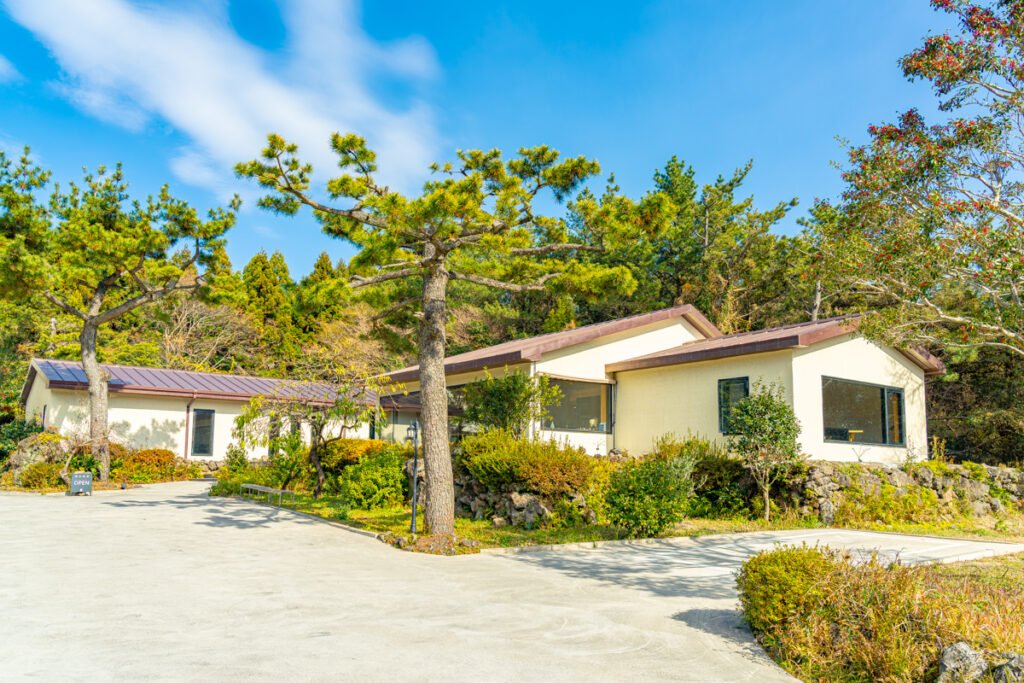
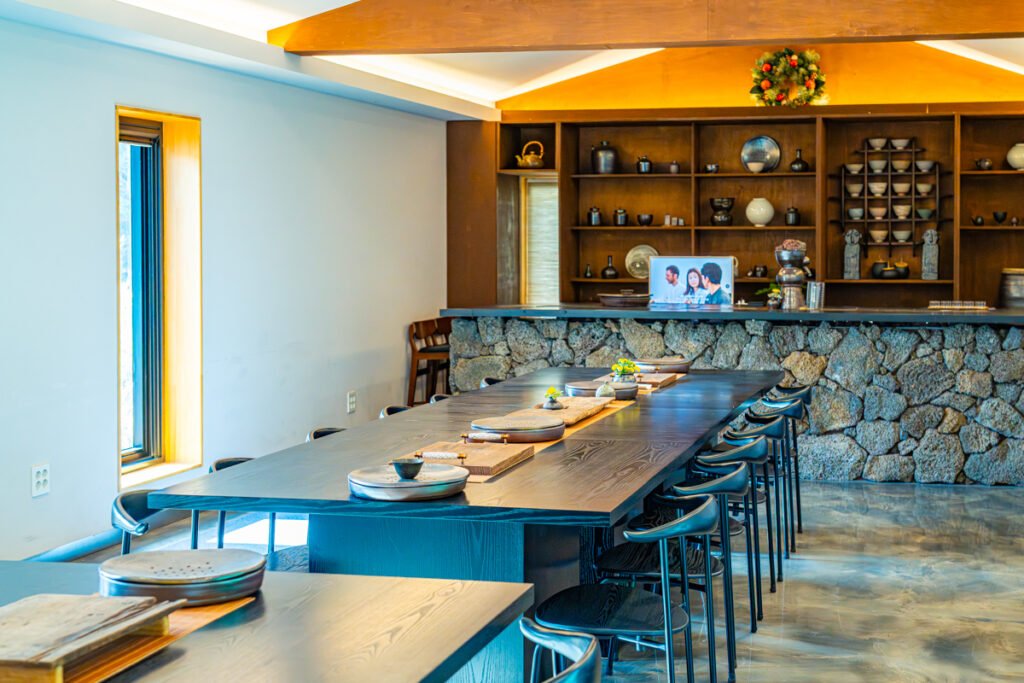
Adjacent to WE Hotel’s entrance, a 30-year-old traditional house has been converted into Hoesoodaok, a tea house operating at a level above typical tourist-oriented establishments. The village name, Hoesudong, translates to “where water flows back”—historically recognized for exceptional water quality.
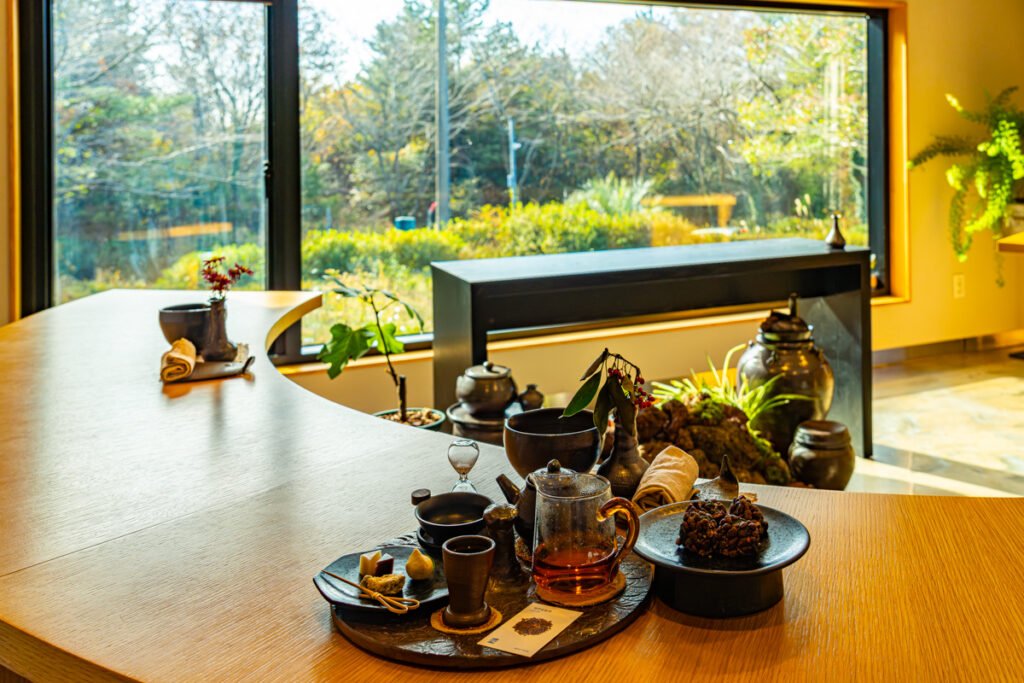
The signature offering is the Premium Tea Tasting Course, where a tea master personally prepares a sequence of Jeju organic leaf teas and flower infusions. The progression is deliberate: each tea builds on the previous, training the palate while delivering cumulative relaxation effects.
Accompanying tea snacks—green tea yokan, omegi-tteok (Jeju millet rice cake), citrus preserved in honey—arrive in traditional Jeju volcanic clay pottery. The presentation reflects substance over style: quality ingredients, proper technique, minimal theatrics.
Hoesoodaok earned designation as a Jeju Wellness Tourism site in 2024 and joined Jeju Tourism Organization’s MICE portfolio in 2025. These certifications require meeting specific service and quality standards. The full tea course gets its own treatment in our dedicated Hoesoodaok tea house guide.
Hallasan Summit Challenge: January Conditions
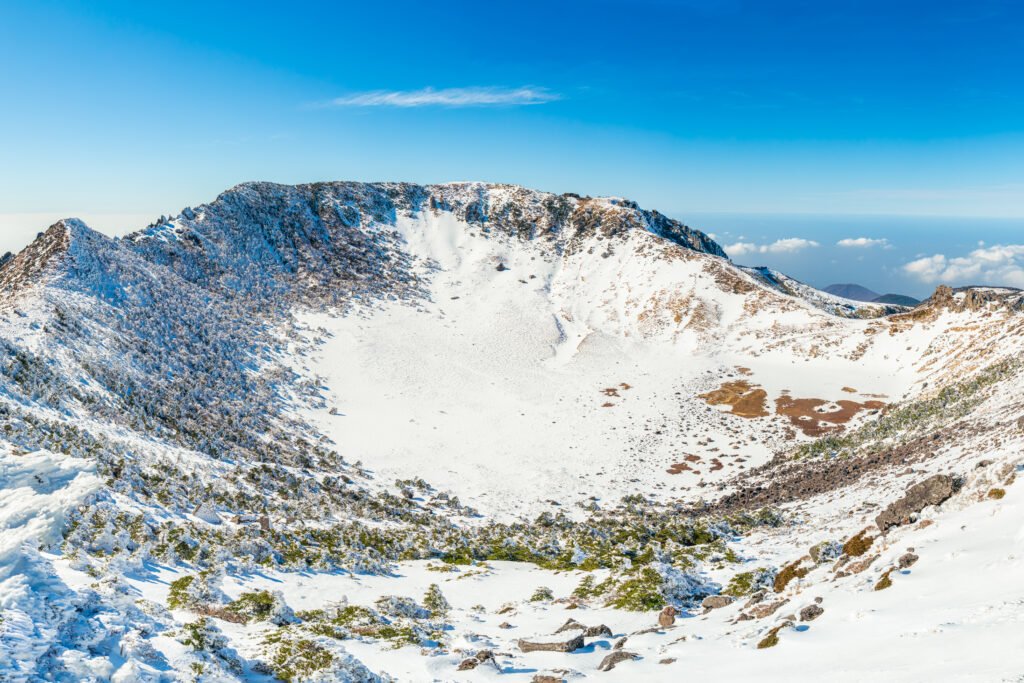
For visitors seeking physical reset alongside mental restoration, Hallasan National Park offers Korea’s highest peak at 1,950 meters. January conditions transform this into a serious mountaineering objective.
The Gwaneumsa Trail to Baengnokdam crater requires 8-9 hours round trip. Snow and ice make crampons and trekking poles essential—not optional. The reward: standing above a frozen volcanic crater lake while the sun rises over a white landscape. For goal-oriented personalities, few experiences match the psychological reset of completing a genuine physical challenge.
Critical logistics: Hallasan summit access requires advance reservation through the Hallasan National Park official website. QR codes must be prepared before arrival at trailheads. January quotas fill quickly during holiday periods.
Geum Oreum: The Accessible Alternative
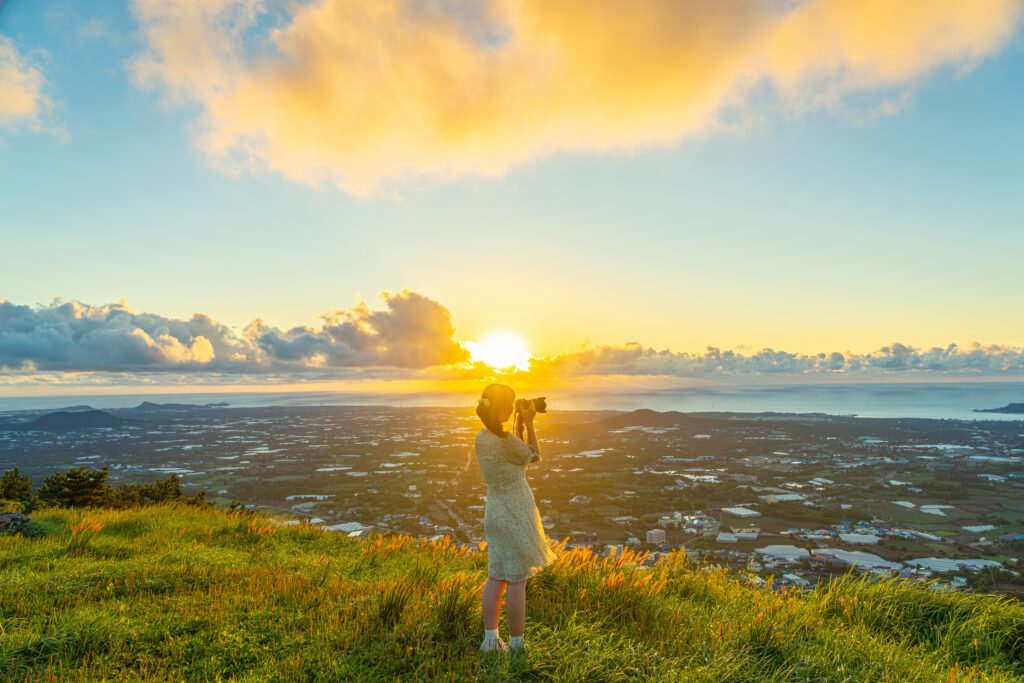
Not everyone wants or can handle a nine-hour winter summit attempt. Geum Oreum provides a concentrated experience: volcanic crater views, mid-mountain panoramas, and sunset potential—all within a 20-minute climb.
Located near the 1100 Road, this 427-meter oreum features a perfectly preserved circular crater. The ridge walk around the rim takes roughly 40 minutes and offers 360-degree views of Jeju’s interior landscape. Timing arrival for sunset transforms a simple hike into a memorable visual experience.
This option works particularly well for those using WE Hotel as a base—the proximity allows a late-afternoon excursion without disrupting spa appointments or dinner reservations.
Architectural Meditation: Tadao Ando’s Jeju Works
If your reset framework includes aesthetic input, Jeju hosts three buildings by Pritzker Prize-winning architect Tadao Ando: Bonte Museum, Yumin Art Museum, and Glass House.
Ando’s signature exposed concrete creates contemplative spaces where light becomes the primary design element. Walking through these buildings—particularly Bonte Museum—produces an effect similar to formal meditation: external stimulation reduces, attention focuses, mental noise quiets.
These visits complement rather than compete with nature-based wellness activities. The architectural spaces process the sensory input gathered from forests and mountains, providing a different category of mental reset.
Practical Information for Your Jeju Wellness Retreat
| Category | Details |
|---|---|
| Location | WE Hotel Jeju: 453-95, 1100-ro, Seogwipo-si, Jeju |
| Contact | +82-64-730-1200 (Hotel) / +82-64-730-1462 (Wellness Center) |
| Getting There | Jeju Airport → 1100 Road → 40 min by car. Bus 600 to Jungmun + taxi. |
| Room Rates | From ₩350,000/night (seasonal variation applies) |
| Wellness Programs | Haeam Hydro, forest therapy, yoga, crystal singing bowl (complimentary for guests) |
| Hoesoodaok | +82-64-739-2794 / Premium tea course from ₩35,000 |
| Hallasan Reservation | Hallasan Required for summit access |
| Best Season | Year-round; January offers snow landscapes but requires winter preparation |
| Driving Note | Check 1100 Road conditions at 064-120 before departure. Snow chains recommended in winter. |
Suggested Itineraries
Day Trip WE Hotel Wellness Center (Haeam Hydro) → Hoesoodaok Tea Ceremony → Geum Oreum Sunset
2-Day Reset
- Day 1: Check-in → Forest Walk → Haeam Hydro → Hoesoodaok → Dinner at Dachae Restaurant
- Day 2: Hallasan Gwaneumsa Trail (full day) → Hotel Sauna Recovery → Departure
For Hallasan summit attempts, dedicate the entire second day to the climb. The 8-9 hour Gwaneumsa route requires pre-dawn departure.
Pingback: Seogwipian Bakery Jeju: 6 Reasons This Stunning Ocean View Cafe Near Seopjikoji Deserves a Morning Visit - THE Travel Manual