
Table of Contents
Experience the Ultimate Ulleungdo Winter Travel Adventure
Winter trip to the island offers an experience unlike anywhere else in Korea. While Ulleungdo Airport is set to open soon, promising a one-hour flight from Seoul, there’s something irreplaceable about the traditional approach to this volcanic island. Departing Pohang around midnight, crossing the East Sea through seven hours of darkness, and watching the island’s silhouette emerge against the blue dawn light—this is how Ulleungdo was meant to be discovered.
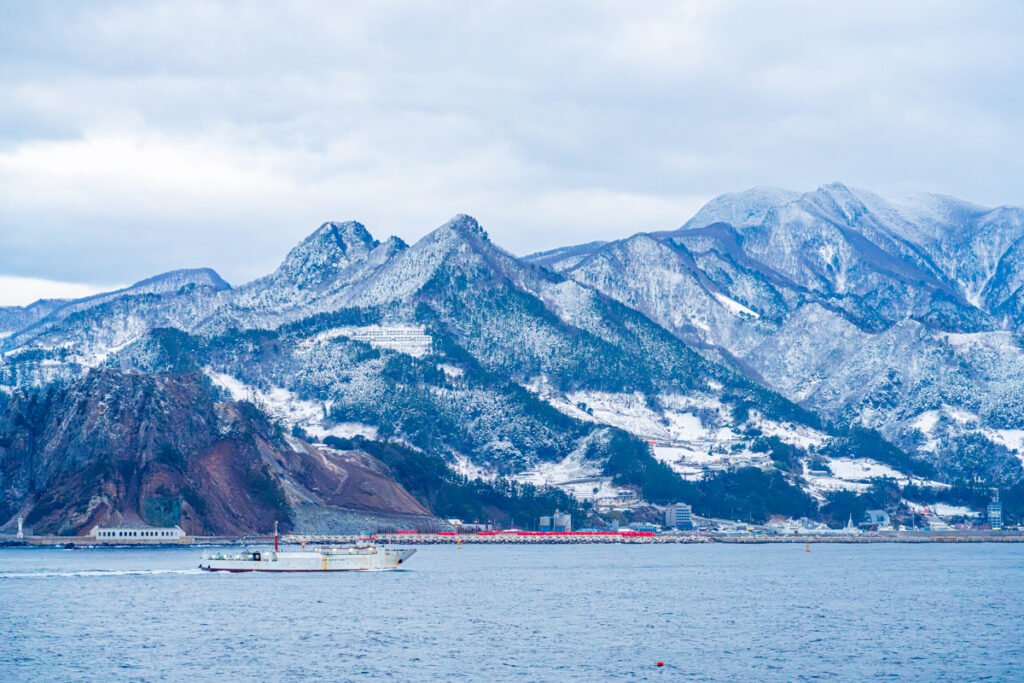
Rising from the middle of the East Sea, Ulleungdo transforms into a winter wonderland each year. The island receives snowfall rarely seen on the Korean mainland, creating dramatic landscapes where snow-covered cliffs and bizarre rock formations meet the churning winter sea. Recognized as one of Korea’s seven National Geoparks and often called “the Galápagos of Korea,” Ulleungdo’s geological significance adds another layer of wonder to your winter journey.
Why Ulleungdo Winter Travel is Now More Accessible Than Ever
Until recently, reaching Ulleungdo in winter was nearly impossible. Small speedboats frequently canceled trips due to rough winter waves. However, the introduction of the large car ferry “Ulleung Cruise” has changed everything. This vessel operates even during high wind advisories, making Ulleungdo winter travel accessible year-round for the first time.
What Makes Winter the Best Season
The island’s winter snowfall is extraordinary. In Nari Basin, snow regularly reaches thigh-height, with maximum accumulation exceeding one meter. Cold winds from the East Sea prevent the snow from melting, preserving the white landscape until late March.
As a photographer who has captured Ulleungdo across all seasons, I can confirm that winter offers the most dramatic and least crowded experience. The interplay of black volcanic rock, white snow, and grey winter seas creates a monochromatic palette that’s impossible to replicate in any other season. On the mainland, Inje’s winter valleys deliver a comparable deep-snow experience without the ferry crossing.
The Overnight Ferry: Your Floating Hotel to Ulleungdo
Boarding at Pohang Yeongil Bay New Port
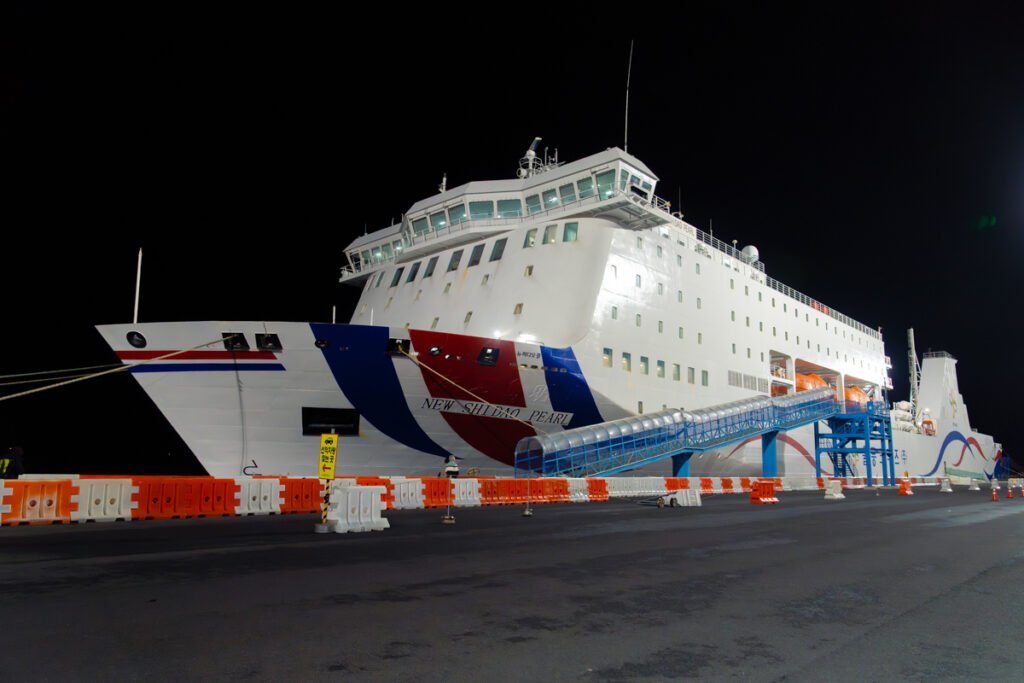
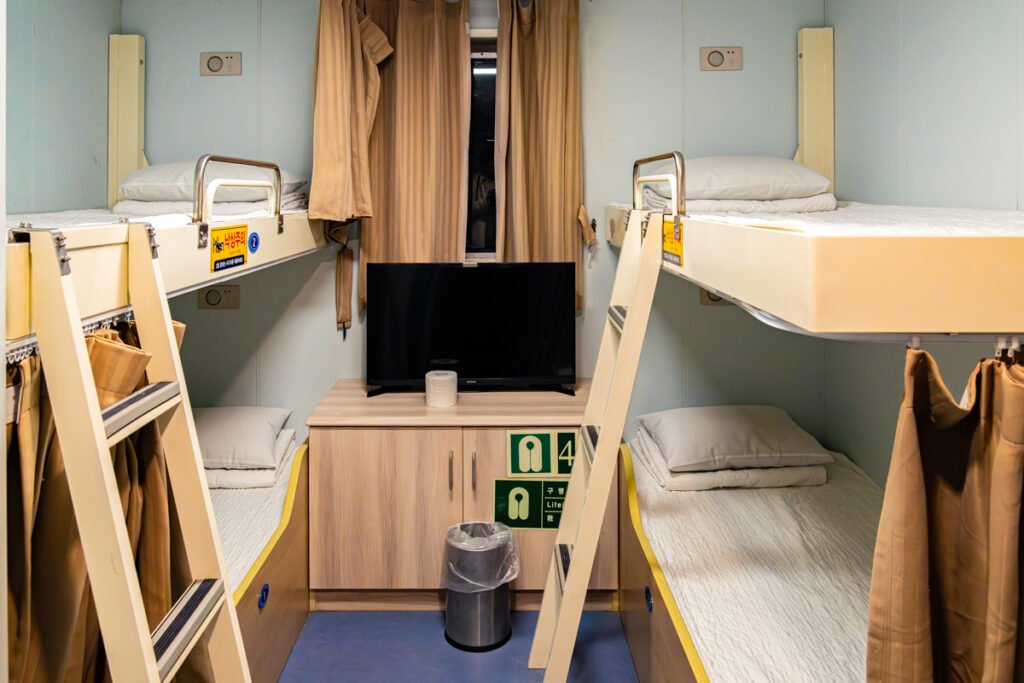
The New Sidao Pearl departs after 11 PM from Pohang’s Yeongil Bay New Port. This is Korea’s largest car ferry, capable of carrying 1,200 passengers. Unlike speedboats where passengers sit in seats, everyone on this ferry gets a cabin.
Onboard Amenities
The ferry features:
- Convenience store for late-night snacks
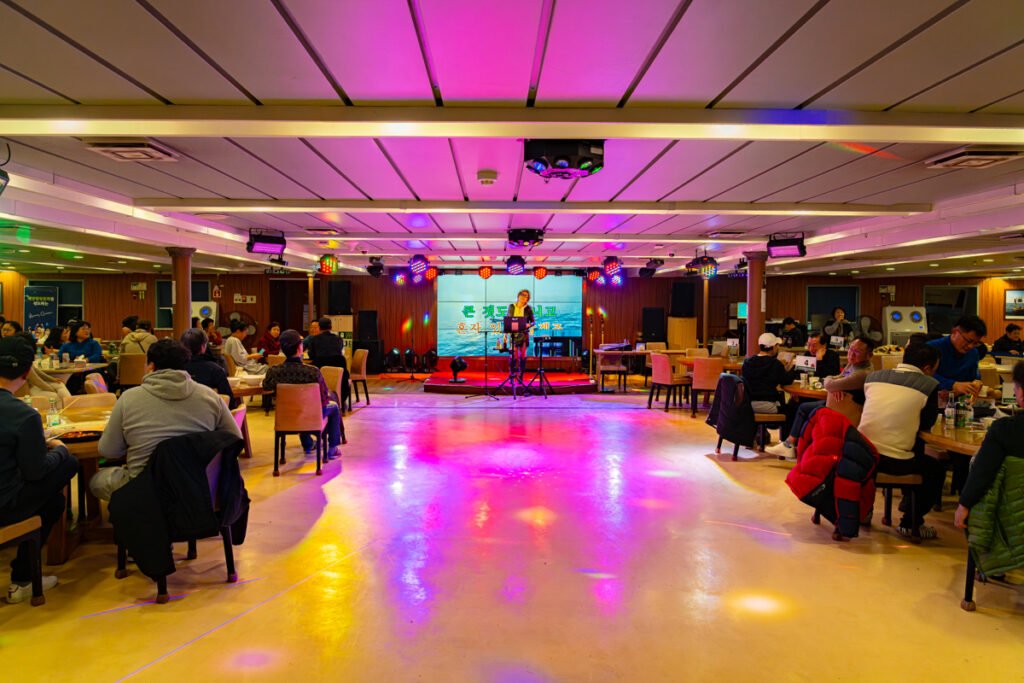
- Restaurant with nightly live performances
- Café for coffee and light meals
- Outdoor deck for ocean viewing (weather permitting)
Insider Tip from Experience: Book a window cabin on the port (left) side. As the ferry approaches Ulleungdo at dawn, you’ll have a front-row seat to watch the volcanic island emerge from the mist. I’ve made this crossing seven times, and this view never fails to take my breath away.
Essential Ulleungdo Winter Attractions
Samseonam (Three Fairy Rocks): The Crown Jewel of Ulleungdo Winter Scenery
Following the coastal road north from Sadong Port, you’ll encounter three towering rocks rising from the sea. Samseonam is considered the finest of Ulleungdo’s three great maritime views.
The Legend: Three celestial maidens descended from heaven, became enchanted by Ulleungdo’s beauty, and missed their return time. The Jade Emperor, angered by their tardiness, turned them into stone. The isolated rock in the distance is said to be the youngest fairy—unable to find her clothes, not even a blade of grass grows on her stone form.
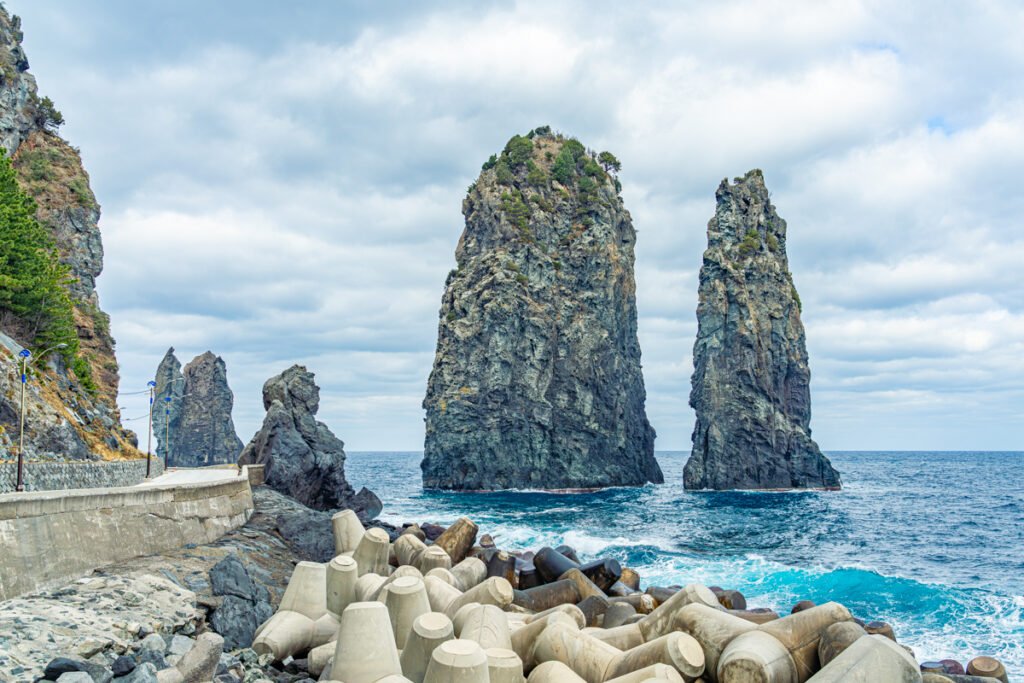
In winter, powerful waves crash against these rocks, creating dramatic white foam that makes the stone formations appear even more striking against the grey winter sky. For photographers, this is arguably the most photogenic spot on the island—the contrast between the dark volcanic rock and the churning white sea spray creates images that practically edit themselves.
Taeha Hyangmok Monorail and Daepunggam: Ulleungdo Winter Views from Above
Located in Taeha-ri on the west side, the Taeha Hyangmok Observatory offers two ways to experience the coastal cliffs: hiking or taking the scenic monorail.
The Monorail Experience:
| Detail | Information |
|---|---|
| Length | 304 meters |
| Duration | Approximately 6 minutes |
| Scenery | Passes through camellia and Japanese bay trees |
From the summit, a 10-minute walk through dense forest leads to Taeha Lighthouse. Standing before the lighthouse, you’ll see the open sea and the natural monument site where fragrant Juniperus chinensis trees grow wild on the cliffs.
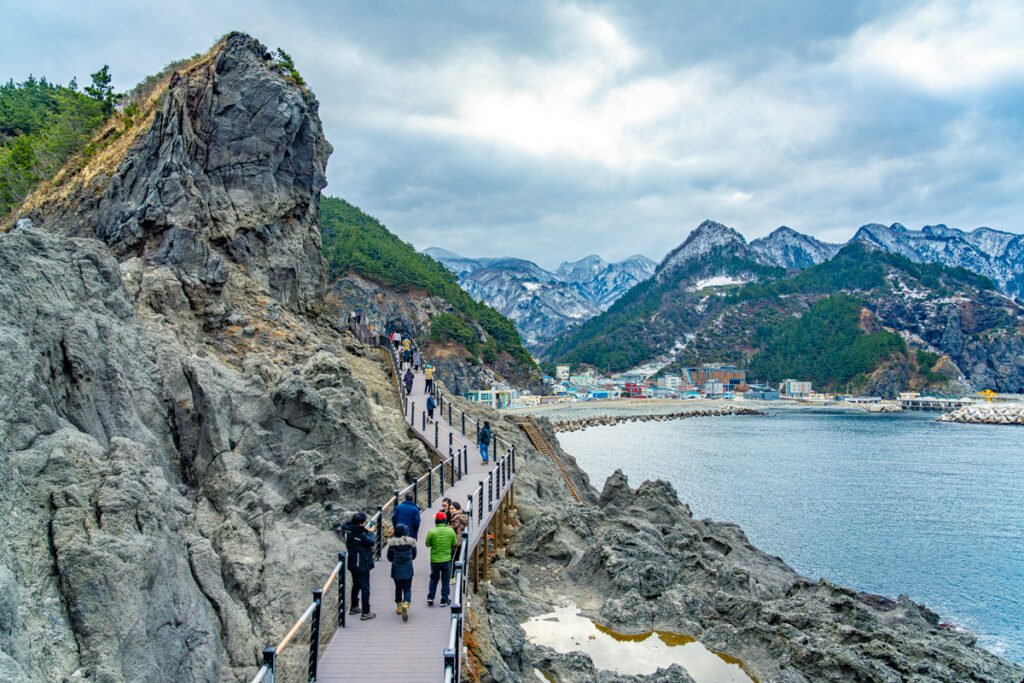
Daepunggam Viewpoint: The coastal trail ends at Daepunggam, named for the spot where Joseon Dynasty boats waited for favorable winds to return to the mainland. The name literally means “waiting for the great wind”—a poetic reminder of how isolated this island once was.
Nari Basin: Walking Inside an Ancient Volcano
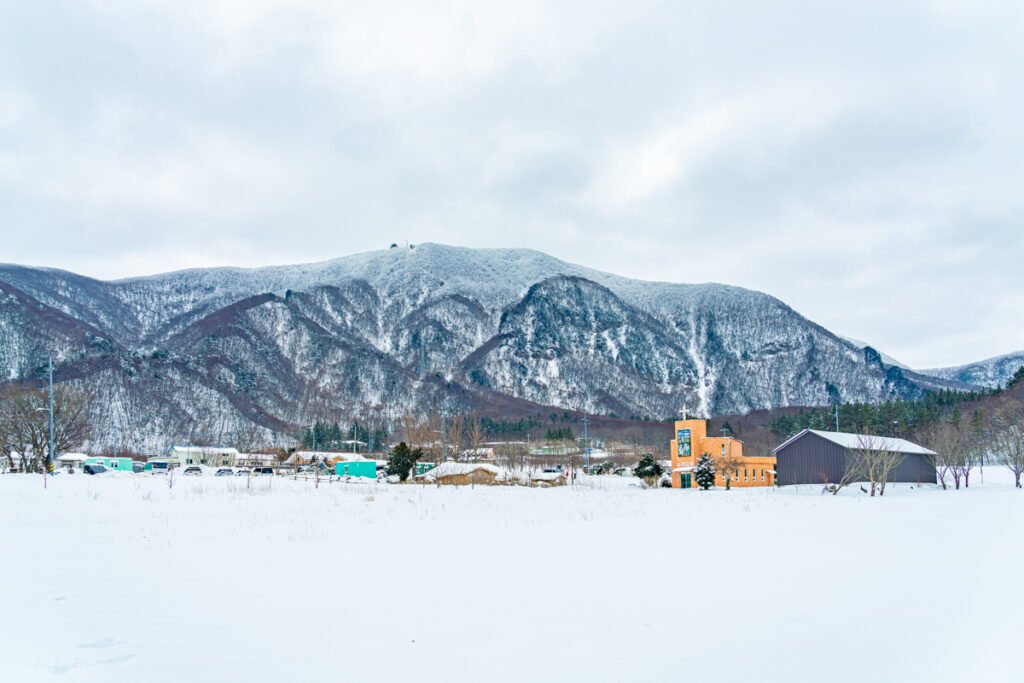
Ulleungdo may be called an island, but it’s essentially a mountain rising from the sea. Formed by volcanic eruption, the entire island features steep peaks and dramatic cliffs. Yet at its center lies Nari Basin—the only flat land on the island.
Geological Significance: This caldera basin formed 15,000 to 20,000 years ago when the volcanic crater collapsed after an eruption. As part of the Ulleungdo-Dokdo National Geopark, it’s a textbook example of caldera formation and offers significant value for both scientific study and tourism.
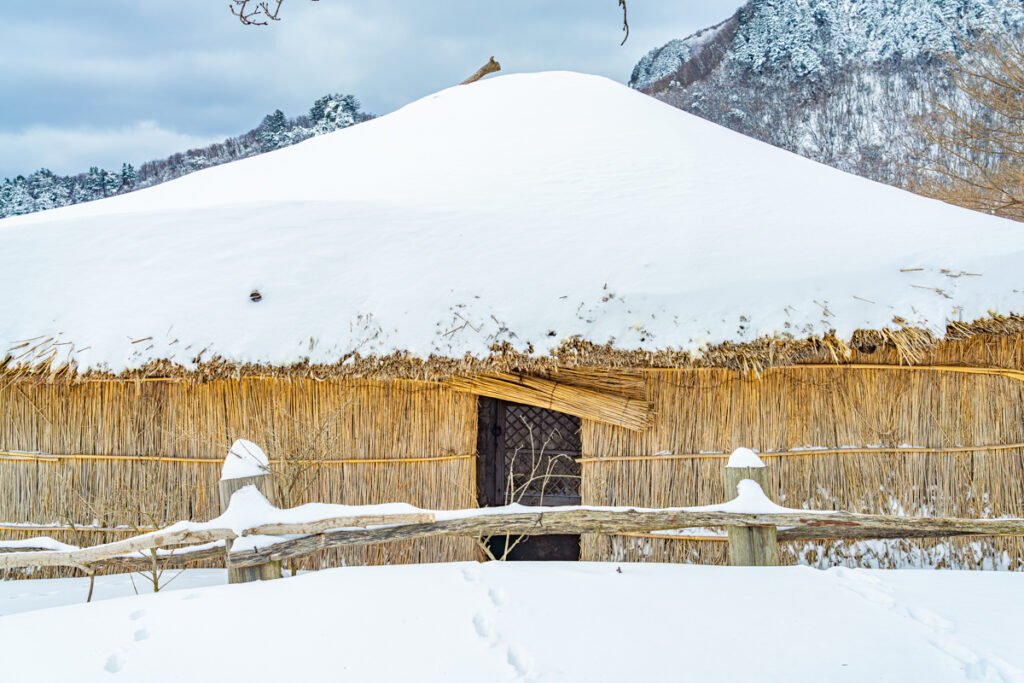
Tumakjip: Traditional Snow-Resistant Architecture
Within Nari Basin, you can explore preserved Tumakjip houses—traditional dwellings designed specifically for Ulleungdo’s heavy snowfall.
Architectural Features:
- Log walls stacked in a well-frame (井) pattern
- Outer layer of udegi (protective covering) for insulation
- Low, sturdy construction to withstand snow weight
Local Expert Tip: After exploring the basin, warm up with deodeok-jeon (bellflower root pancakes) or sanchae bibimbap (wild vegetable rice bowl) at one of the local restaurants. Having photographed food across Korea for over a decade, I can say the mountain herbs grown in Nari Basin have a depth of flavor that’s impossible to replicate anywhere on the mainland.
Gwaneumdo Island: Crossing to an Uninhabited Isle
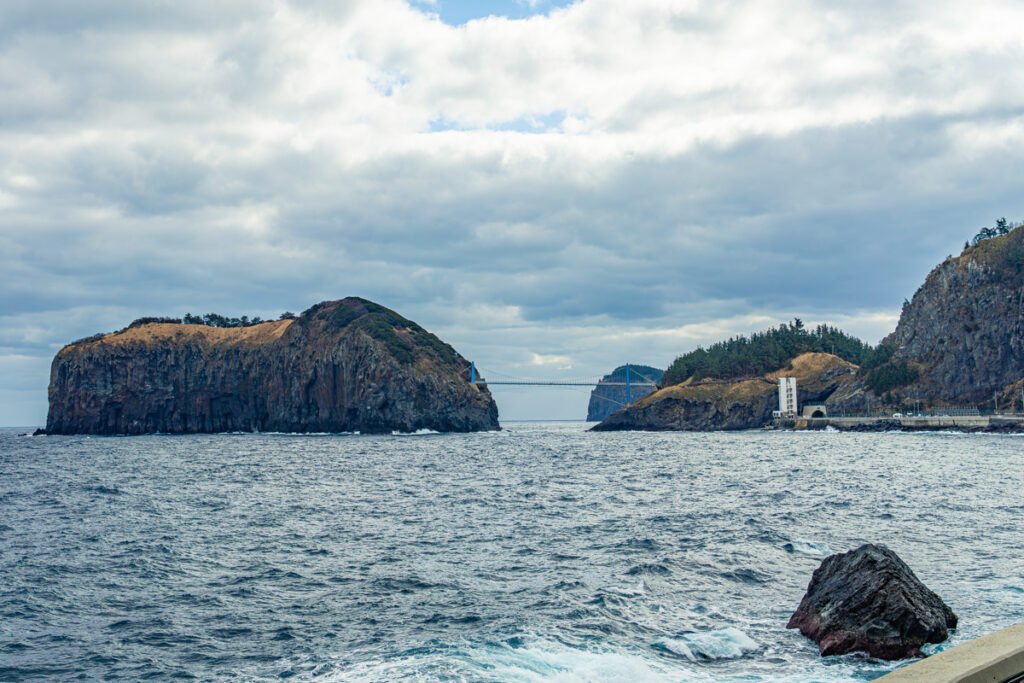
Off the northeastern tip of Ulleungdo lies Gwaneumdo, the third-largest affiliated island after Jukdo and Dokdo. Until 2012, this uninhabited island was only accessible by boat. Now, a connecting bridge from Seommok allows visitors to walk directly onto the island.
Trail Options:
| Course | Duration | Highlights |
|---|---|---|
| A Course (Short) | ~20 min | Observatory with views of Ulleungdo, Jukdo, and Samseonam |
| B Course (Long) | ~40 min | Gwaneumssanggul (Twin Caves) with 14-meter columnar joint cliffs |
Hidden Gem: On clear winter days, you may spot Dokdo’s silhouette on the horizon from the A Course observatory. The twin caves along B Course were legendarily used as pirate hideouts, adding an element of adventure to the trek.
Café Ulla: The Perfect Ulleungdo Winter Travel Rest Stop
Near Chusan Mongdol Beach, a five-minute uphill walk leads to Café Ulla, operated by Cosmos Resort. The café offers views of Songgotsan (Needle Mountain) and the East Sea.
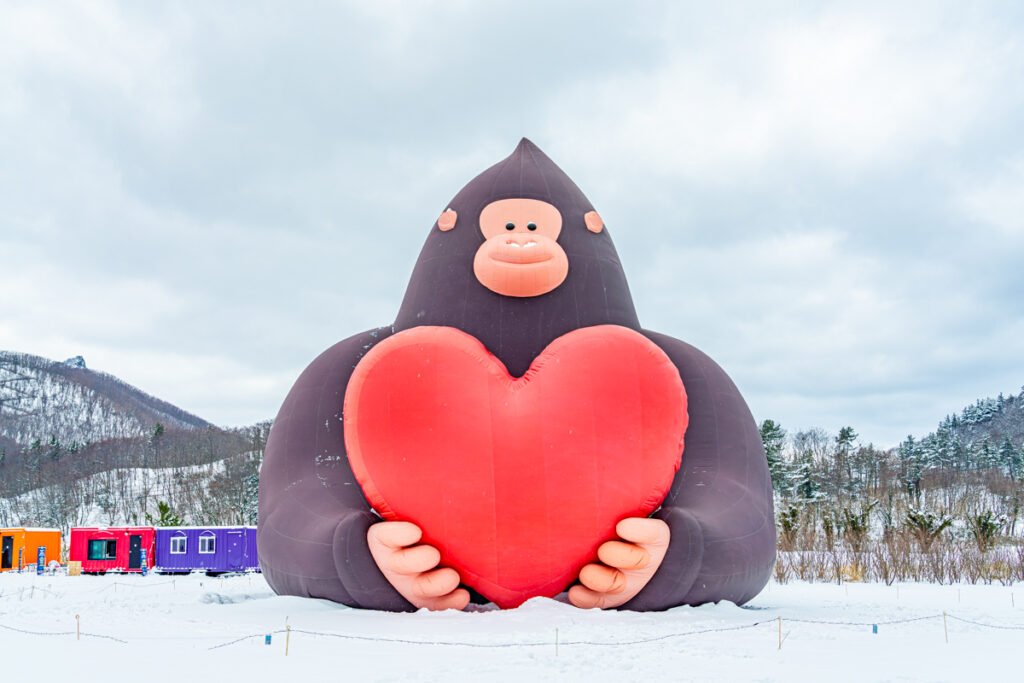
About the Name: “Ulla” combines “Ulleungdo” and “gorilla”—the island’s mascot character developed by Cosmos Resort. The café serves signature drinks featuring Ulla character cube lattes and marshmallow hot chocolate.
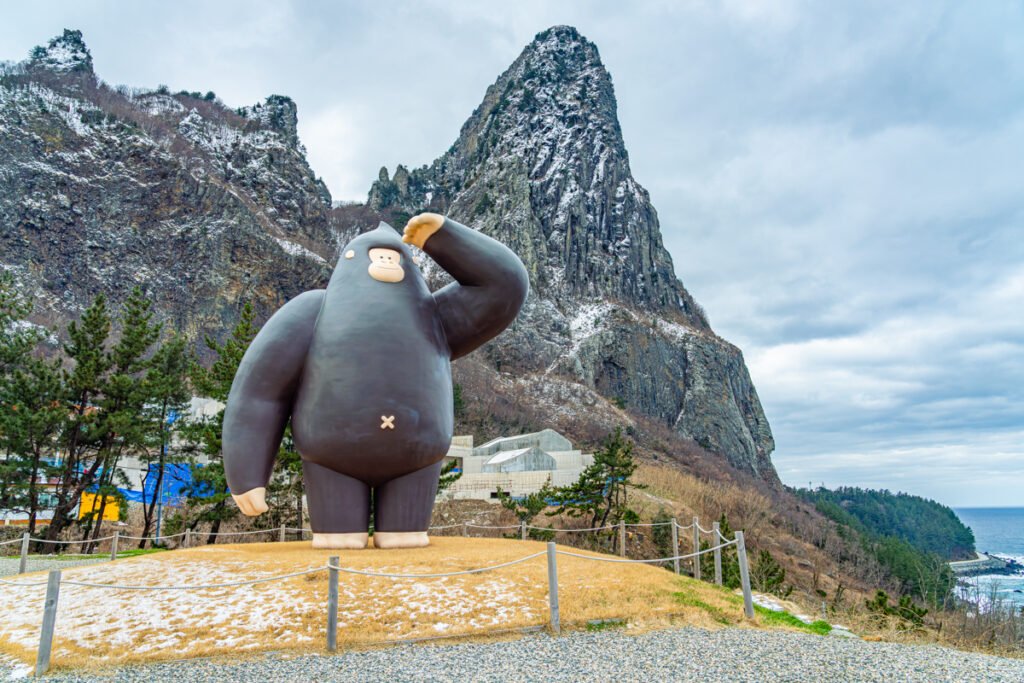
Practical Note: The café is open to non-guests, making it an ideal rest stop during your Ulleungdo winter travel exploration. The view of Songgotsan’s distinctive peaked summit is particularly striking when dusted with snow.
The Travel Manual: Ulleungdo Winter Trip Essentials
Getting There
| Detail | Information |
|---|---|
| Departure Port | Pohang Yeongil Bay New Port (포항 영일만신항) |
| Ferry Name | New Sidao Pearl (뉴씨다오펄호) |
| Departure Time | Approximately 11:00 PM (boarding starts ~11 PM) |
| Journey Duration | 7 hours |
| Arrival Port | Sadong Port, Ulleungdo |
| Return Departure | 12:30 PM from Sadong Port |
| Booking | Reserve 2–3 weeks ahead during peak winter season |
Best Time for Your journey to Ulleungdo
| Period | Conditions |
|---|---|
| December–February | Peak snow season, most dramatic landscapes |
| March | Snow still present, slightly milder temperatures |
| Holiday Note | Christmas and Lunar New Year require advance booking |
Getting Around the Island
| Transportation | Best For | Cost Estimate |
|---|---|---|
| Rental Car | Maximum flexibility, essential for photographers | ₩80,000–100,000/day |
| Taxi Tour | Convenient for non-drivers, local knowledge | ₩150,000–200,000/full day |
| Public Bus | Budget travelers, limited schedule | ₩1,500–3,000/ride |
Important Considerations for This journey
- Weather Dependency: Even with the large ferry, departures can be canceled during severe storms. Build buffer days into your itinerary—I recommend at least one extra day.
- Motion Sickness: The 7-hour crossing can be rough. Bring medication if you’re prone to seasickness. The ferry pharmacy sells remedies, but they sell out quickly.
- Warm Clothing: Ulleungdo winter temperatures feel colder than mainland Korea due to sea winds. Layering is essential, and waterproof outer layers protect against sea spray during ferry deck viewing.
- Cash: While cards are accepted at major establishments, smaller vendors and some restaurants prefer cash. ATMs are available but limited.
- Photography Gear: Bring lens cloths for sea spray, extra batteries (cold drains them faster), and waterproof bags for protection.
Final Thoughts: The Value of Slow Travel
When Ulleungdo Airport opens, reaching the island will take just one hour. But the overnight ferry journey offers something no flight can replicate: the anticipation of watching a volcanic island materialize from the dawn mist after a night spent crossing the East Sea. If your route home runs up the coast, Mukho Harbor’s souvenir scene makes a worthwhile stop in another East Sea port town.
This journey is best experienced slowly. The seven-hour crossing isn’t an obstacle—it’s part of the destination.