
Table of Contents
Introduction: A Bowl of Noodles With 1,500 Years of Buddhist Tradition
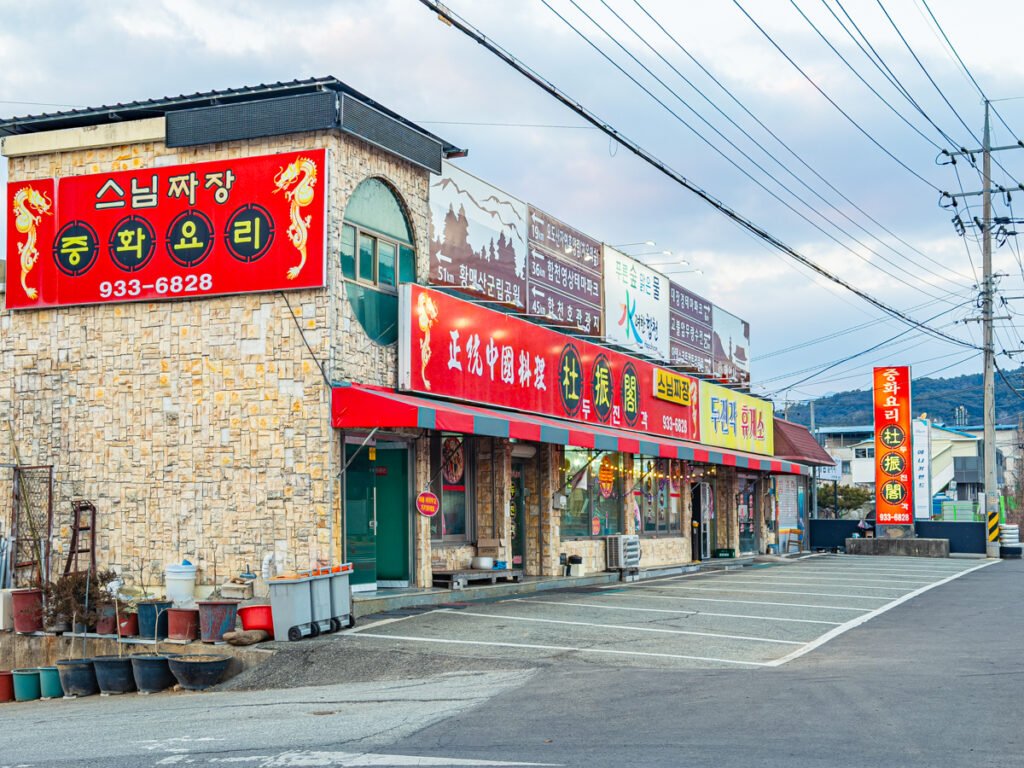
In the quiet countryside of Hapcheon, Gyeongsangnam-do, nestled at the entrance to the sacred Gayasan Mountain, there exists a humble old restaurant that has become something of a pilgrimage site—not just for devout Buddhists, but for plant-based food lovers seeking authentic Korean temple cuisine. Dujingak (두진각) serves what might be the most spiritually authentic vegan-friendly jjajangmyeon in all of Korea: the legendary Seunim Jjajang (스님짜장), or “Monk’s Jjajangmyeon.”
As a travel writer who has spent years documenting Korea’s culinary landscape, I can tell you that this isn’t a trendy vegan café or an Instagram-worthy destination. Dujingak is what Koreans call a nopo (노포)—a beloved old establishment that has been serving the same reliable dishes for decades. The appeal isn’t in the ambiance; it’s entirely in what arrives in your bowl.
What Makes Seunim Jjajang Different?
The Philosophy Behind the Bowl
Standard jjajangmyeon—Korea’s beloved black bean noodles—relies heavily on garlic, green onions, and often pork for its signature savory depth. For Buddhist monks, consuming the five pungent vegetables (oshinchae: garlic, green onions, chives, leeks, and wild rocambole) is believed to stimulate desire and anger, disrupting meditation practice. Meat is entirely forbidden.
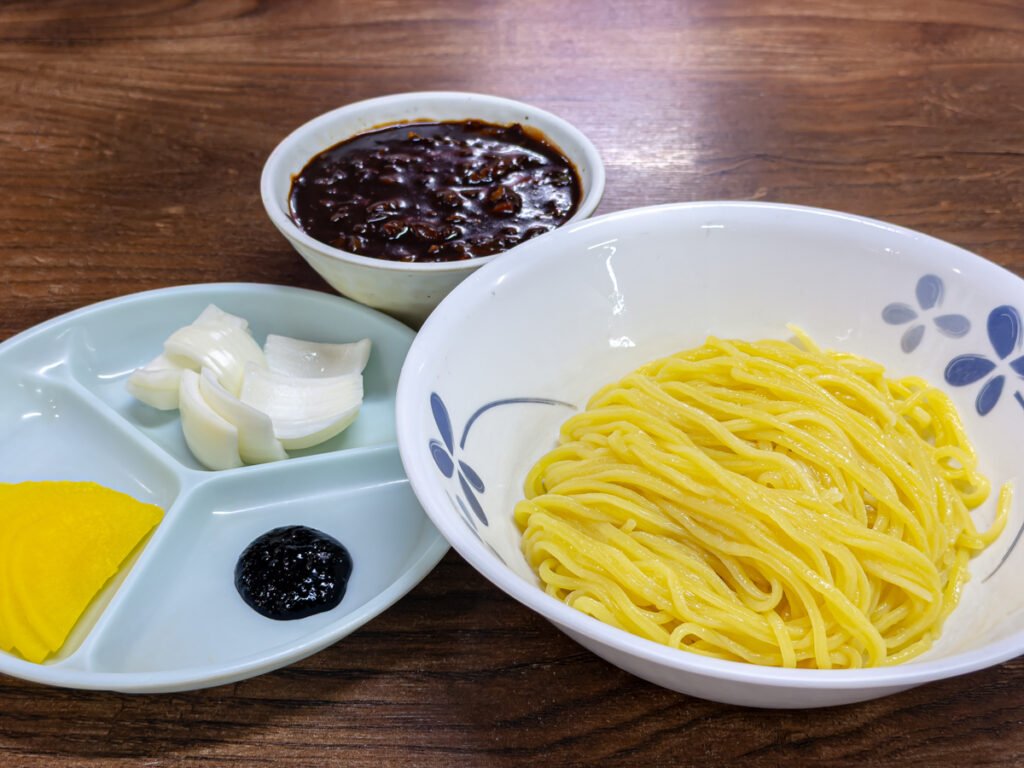
Dujingak’s recipe was developed specifically for monks visiting nearby Haeinsa Temple. They don’t simply omit the forbidden ingredients—they’ve refined alternative flavor profiles using only temple-approved ingredients over many years of practice.
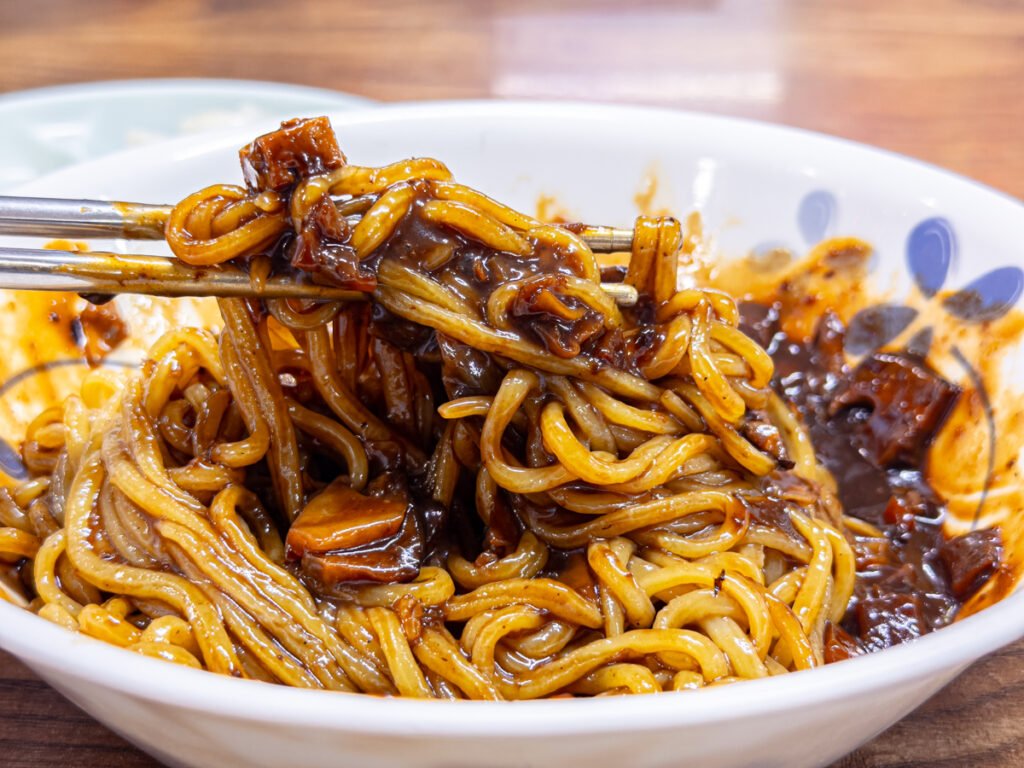
From my tasting experience: The absence of garlic and onion doesn’t create a void—it creates clarity. You taste the earthiness of the black bean paste (chunjang) more purely, complemented by the natural sweetness of fresh vegetables like cabbage, zucchini, and shiitake mushrooms. The dish is noticeably lighter than regular jjajangmyeon—less greasy, more digestible. Many visitors report feeling satisfied without the heavy, bloated sensation that often follows a typical jjajang meal.
Key Ingredients That Set It Apart
The kitchen at Dujingak builds deep umami flavor without any of the forbidden five vegetables or meat:
- Shiitake mushrooms — Provide meaty texture and natural glutamates
- Fresh cabbage and zucchini — Add sweetness and bulk
- Black bean paste — The soul of the dish, prepared without garlic or onion
- Wheat noodles — Traditional preparation (typically egg-free)
- Minimal oil — Results in a cleaner, less greasy finish
A Note on Vegan Status
Dujingak is best described as vegan-friendly rather than certified vegan. While the dish contains no meat and excludes the five pungent vegetables following strict Buddhist dietary laws, travelers with strict vegan requirements should confirm on-site whether eggs are used in the noodle dough or if any animal-derived ingredients appear elsewhere. Traditional temple cuisine typically avoids all animal products, but verification is always wise.
The Dujingak Experience: Authentic Nopo Charm
What to Expect
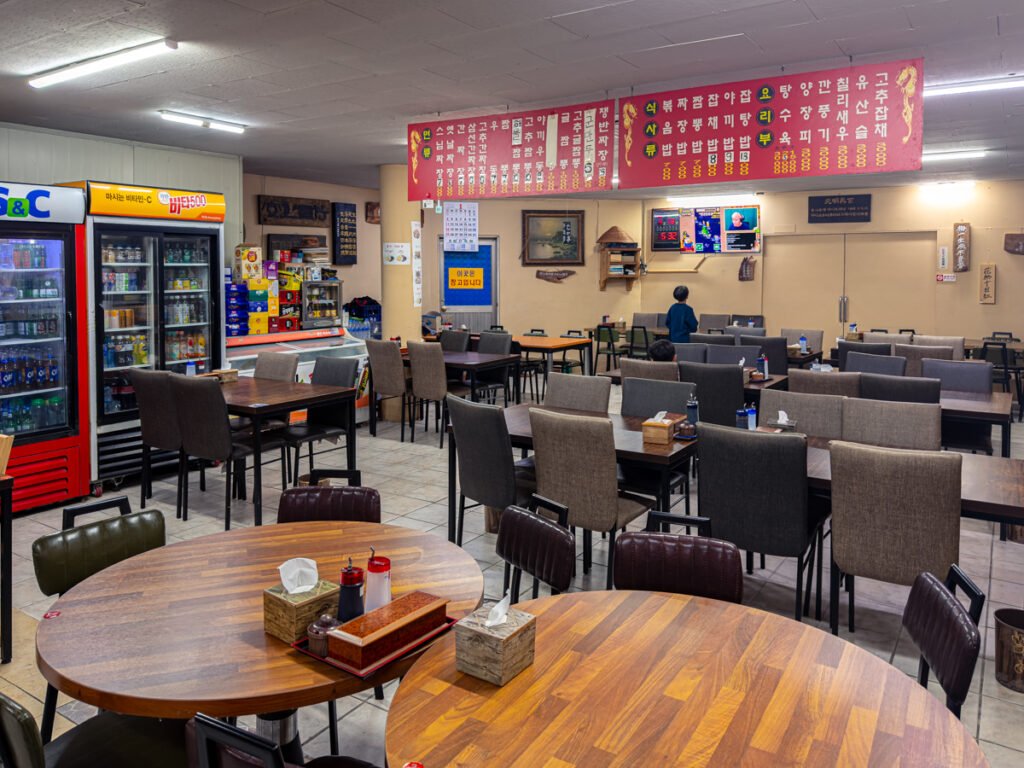
Let’s be clear: Dujingak is not a destination for ambiance. This is a straightforward, old-school Korean restaurant—the kind of place where the walls show their age, the furniture is purely functional, and the focus is entirely on the food. There are no carefully curated interiors or Instagram corners here.
And that’s precisely the point.
In Korea, nopo restaurants like Dujingak carry a different kind of credibility. Their longevity speaks to consistency and local trust. The monks and temple visitors who have been coming here for years aren’t drawn by décor—they return because the food delivers exactly what it promises, every single time.
What I appreciated as a traveler: There’s something refreshing about a place that doesn’t try to be anything other than what it is. You sit down, you order, you eat well, and you leave satisfied. The simplicity matches the philosophy of the food itself.
The Menu
Dujingak keeps things simple. The star is the Seunim Jjajang, and that’s what most visitors come for:
| Dish | Description | Dietary Notes |
|---|---|---|
| Seunim Jjajang | Black bean noodles without five pungents or meat | Vegan-friendly* |
*Confirm egg content on-site for strict vegan requirements
The Location: Gateway to Haeinsa
Why This Matters
Dujingak sits in Gaya-myeon, Hapcheon-gun—the gateway village to one of Korea’s most sacred sites. Just a 10-15 minute drive up the mountain road lies Haeinsa Temple, one of Korea’s Three Jewel Temples and home to the Tripitaka Koreana, a UNESCO World Heritage collection of over 80,000 wooden printing blocks containing Buddhist scriptures. Another of the Three Jewel Temples, Tongdosa in Yangsan, sits about two hours east and pairs well on a Gyeongsang temple circuit.
This proximity isn’t coincidence. Dujingak exists precisely because of its location near one of Korean Buddhism’s holiest sites—serving monks and pilgrims who need food that adheres to strict Buddhist dietary laws.
Combining Your Visit
A trip to Dujingak makes the most sense as part of a broader Hapcheon cultural experience:
1. Haeinsa Temple (해인사) — 10-15 minute drive
- UNESCO World Heritage Site
- Home to 80,000+ wooden printing blocks of Buddhist scriptures
- One of Korea’s Three Jewel Temples
- Temple stay programs available
- http://www.haeinsa.or.kr
2. Gayasan National Park (가야산) — Surrounding area
- Excellent hiking trails
- Sacred mountain in Korean Buddhism
- Stunning autumn foliage (October-November)
3. Hapcheon Movie Theme Park — 20-25 minute drive
- Film set locations used in Korean historical dramas
- Unique photography opportunities
- https://hcmoviethemepark.com
(Image Placement: Scenic view of Gayasan Mountain with Haeinsa Temple area | Alt Text: Gayasan Mountain Haeinsa Temple area Hapcheon Korea)
The Travel Manual: Dujingak Practical Guide
Essential Information
| Category | Details |
|---|---|
| Korean Name | 두진각 |
| Address | 경남 합천군 야로면 가야산로 461 (Gaya-myeon, Hapcheon-gun, Gyeongsangnam-do) — Near Haeinsa Temple entrance |
| Nearest Major City | Daegu (approximately 1.5 hours by car) |
| Operating Hours | 10:00~20:00 |
| Regular Closing Day | – |
| Price Range | ₩7,000 – ₩10,000 per dish (as of 2025) |
| Payment | Credit Card available |
| Language | Korean |
| Parking | Available |
| Atmosphere | Traditional nopo (old Korean eatery) — simple and no-frills |
| Dietary Notes | No meat, no five pungent vegetables; confirm strict vegan status on-site |
How to Get There
By Public Transport:
- Take an intercity bus from Daegu Seobu Bus Terminal to Hapcheon Intercity Bus Terminal (approximately 1 hour 20 minutes)
- From Hapcheon Terminal, take a local bus toward Haeinsa Temple (해인사) direction
- Alternatively, taxi from Hapcheon Terminal is recommended (approximately ₩15,000–25,000)
By Car (Recommended):
- Most convenient option for exploring the Haeinsa area
- Search “두진각 합천” on Naver Map or Kakao Map
- Parking available at the restaurant
From Seoul:
- Drive via Gyeongbu Expressway → Daegu → Local roads to Hapcheon (approximately 3.5-4 hours)
- Alternatively: KTX to Daegu, then rental car or bus to Hapcheon
Pro Tips for Your Visit
✓ Call ahead — Especially if visiting on a weekend or holiday; confirm they’re open
✓ Check Monday closures — The restaurant often closes on Mondays, but this can vary
✓ Bring cash — While cards may be accepted, cash ensures a smooth transaction in this rural area
✓ Learn this phrase: “스님짜장 하나 주세요” (Seunim jjajang hana juseyo) — “One Monk’s Jjajangmyeon, please”
✓ Combine with Haeinsa — Visiting the temple provides essential context for understanding why this style of cooking exists
✓ Manage expectations — This is a simple, old restaurant; come for the food, not the atmosphere
✓ For strict vegans — Politely ask: “계란 들어가나요?” (Gyeran deureogayo?) — “Does it contain egg?”
Final Thoughts: Substance Over Style
Dining at Dujingak isn’t about aesthetics or social media moments. It’s about tasting something real—a recipe refined over years to serve Buddhist monks who follow ancient dietary laws. The restaurant itself makes no effort to impress, and that honesty is part of its appeal.
What struck me most was the lightness of the meal. Regular jjajangmyeon, while delicious, often leaves you sluggish. Seunim Jjajang does the opposite—you feel nourished but clear, satisfied but not weighed down. It’s easy to understand why monks favor this approach: food that fuels without dulling the mind.
For plant-based travelers, this is validation that meat-free eating isn’t a modern invention but an ancient practice refined over 1,500 years of Korean Buddhist tradition. For everyone else, it’s a chance to taste something genuinely different in an era of homogenized food experiences. If you want the refined city end of the same tradition, Balwoo Gongyang in Seoul serves formal temple cuisine near Jogyesa.
The verdict from my notebook: Dujingak’s Seunim Jjajang won’t win any awards for presentation or atmosphere. But it might be one of the most honest meals you’ll have in Korea—unpretentious, purposeful, and quietly satisfying. Sometimes that’s exactly what you need.
Share Your Experience
Have you visited Dujingak or tried temple cuisine in Korea? We’d love to hear your thoughts in the comments below.